Solution Guide
Use a Scale
Easy
Can be done immediately with no special skills
Low Cost
Under $20 investment
90%
Success Rate
Step-by-Step Visuals
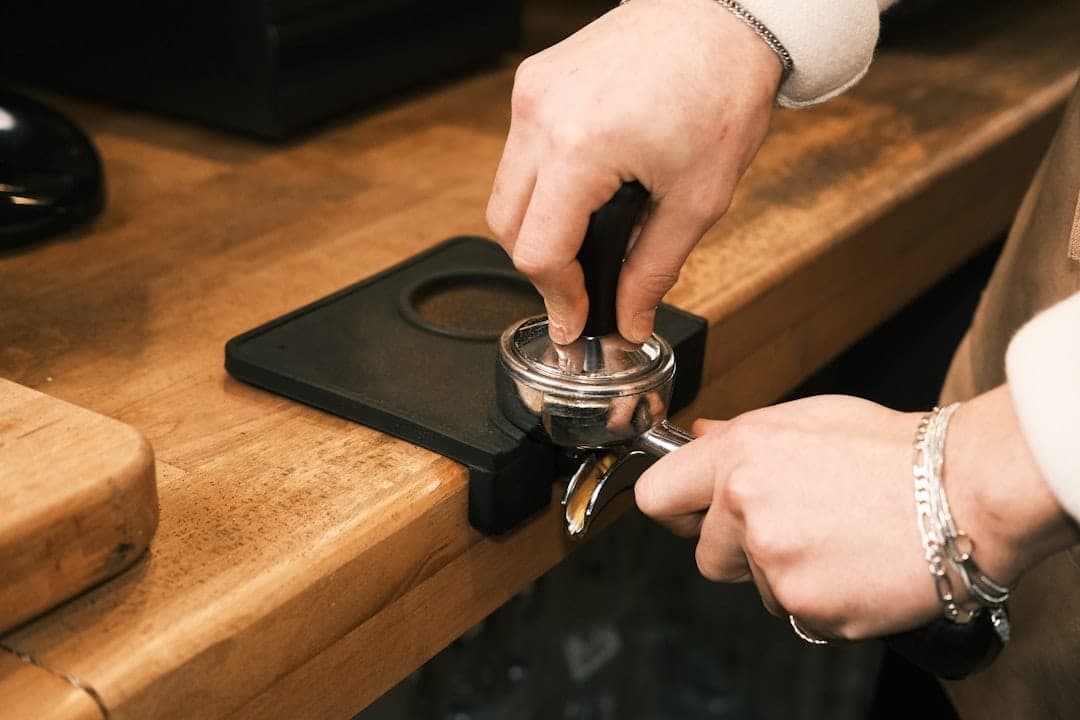
Tamping technique
Even distribution
Clean equipment
What To Do
Weigh your coffee dose and espresso output with a 0.1g precision scale. Aim for consistent input/output ratios.
Expected Result
Reproducible results, easier troubleshooting, precise recipe development.
Effectiveness
Success Rate90%
Based on community feedback and expert recommendations
Full Guide
Goal
Use a scale to measure dose (input) and yield (output) for repeatable, consistent espresso.
What you need
- A scale accurate to 0.1g (espresso scales are ideal)
- Fits under your cup on the drip tray
Measuring dose
- Place your portafilter on the scale, tare to zero.
- Grind directly into the portafilter.
- Adjust to your target dose (e.g., 18.0g for an 18g basket).
Measuring yield
- Place your cup on the scale on the drip tray, tare to zero.
- Start the shot and watch the weight climb.
- Stop when you hit your target yield (e.g., 36g for a 1:2 ratio).
Why ratios matter
| Ratio | Style | Character |
|---|---|---|
| 1:1.5 | Ristretto | Intense, syrupy, concentrated |
| 1:2 | Normale | Balanced, classic espresso |
| 1:2.5+ | Lungo | Lighter, more volume, brighter |
Dialing in with a scale
- Start with a standard ratio (1:2) and typical time (25–30 sec).
- Taste and adjust:
- Sour? Grind finer or increase yield.
- Bitter? Grind coarser or decrease yield.
- Keep notes of what works for each coffee.
Tips
- Use the same ratio as a starting point when switching beans.
- Time AND weight both matter—optimize for both.
- Don't stress over 0.1g variations in yield.
Addresses These Causes
Helps With These Symptoms
Need help diagnosing your issue?
Our tool identifies the right solution for you
Was this solution helpful?