How to Dial In Espresso: A Step-by-Step Guide
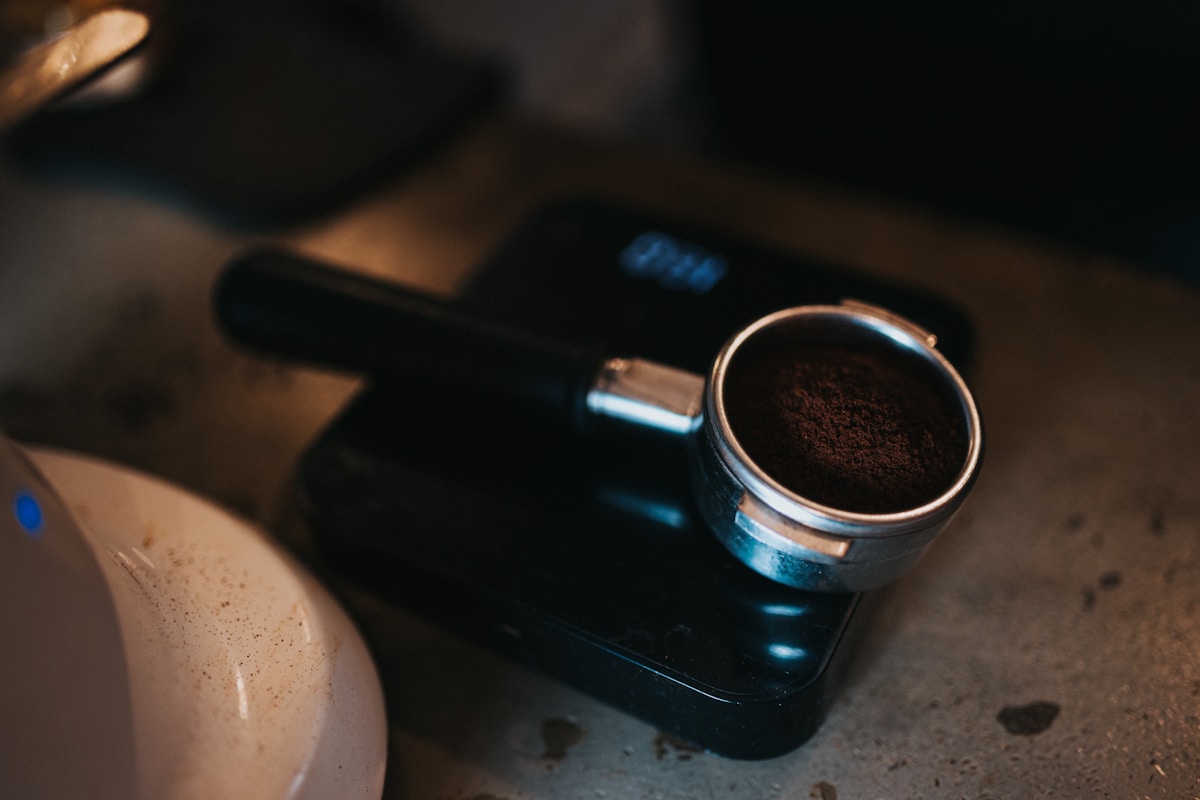
Stop guessing and start brewing perfectly. Get the exact workflow to dial in any bag of coffee beans in 3 shots or less.
You bought a $25 bag of specialty coffee roasted exactly 7 days ago. You excitedly tear open the bag, grind the beans, pull a shot, and… it tastes absolutely terrible.
Don't blame the roaster yet. You just need to dial it in.
"Dialing in" is industry jargon for adjusting your variables (grind size, dose, and yield) until your espresso tastes perfectly balanced. Every new bag of coffee requires this process, even if it's the exact same brand you bought last week. As beans age, their solubility changes, meaning your recipe has to change, too.
Stop changing three things at once and hoping for the best. Follow this exact workflow to dial in any coffee in three shots or less.
Step 1: Lock In Your Dose (The Foundation)
Your dose is the amount of dry coffee grounds you put into the portafilter basket.
To dial in efficiently, pick a dose and never change it during the process. Constantly adjusting your dose throws off every other variable.
- How to Choose: Look at your basket. If it’s an 18-gram basket, use exactly 18.0 grams of coffee. A scale is non-negotiable here.
- The Rule: A dose can vary slightly depending on roast level (dark roasts take up more volume than dense light roasts), but find the weight that leaves a 2mm gap between the tamped puck and the shower screen, and lock it in.
Step 2: Lock In Your Yield (The Target)
Your yield is the final weight of liquid espresso in your cup.
Again, you need a stable target. Standard espresso extraction starts with a 1:2 brew ratio. For every 1 gram of coffee, you want 2 grams of espresso.
- The Math: If your locked-in dose is 18 grams, your target yield is exactly 36 grams.
- The Execution: Place a scale under your cup while pulling the shot. Stop the pump when the scale hits roughly 34 grams (the last few drips will push it right to 36 grams).
Step 3: Adjust Your Grind Size for Time (The Rough Draft)
You have a dose (18g) and a target yield (36g). Now, we use grind size to manipulate how long it takes to hit that target.
Our goal is for those 36 grams to extract in 25 to 30 seconds (starting the timer when you turn the pump on).
- If it hits 36g in 15 seconds: The water is rushing through too easily. Grind finer to create more resistance.
- If it hits 36g in 45 seconds: The water is struggling to push through the puck. Grind coarser to relieve resistance.
Adjust your grinder until your 18g dose hits a 36g yield in roughly 25-30 seconds. Once you achieve this, you have established a solid baseline.
Step 4: Adjust Yield for Taste (The Polish)
You’ve hit the 1:2 ratio in 30 seconds. Congratulations! Now, taste it. Do not skip this step. The timer gives you a ballpark, but your tongue makes the final call.
Always adjust yield to fix taste imbalances before you adjust anything else.
Did it taste unpleasantly SOUR?
Sourness means under-extraction. The water didn't pull enough sweet compounds out of the beans.
- The Fix: Pull a longer shot. Keep the 18g dose, but let the pump run until you hit 40g to 45g out (a 1:2.2 to 1:2.5 ratio). The extra water will extract more sweetness to balance the sour acidity.
Did it taste harshly BITTER?
Bitterness means over-extraction. The water lingered too long and pulled out astringent, dry compounds.
- The Fix: Pull a shorter shot. Keep the 18g dose, but stop the pump when you hit 27g to 32g out (a 1:1.5 to 1:1.8 ratio, also known as a ristretto). You are stopping the extraction before the bitter compounds make it into your cup.
🔍 Shots Completely Unpredictable?
Let Our Engine Isolate the Variable.
If one shot takes 15 seconds and the next takes 45 on the same grind setting, there is an equipment or technique failure—not a recipe problem. Our Bayesian diagnosis engine will find it.
→ Diagnose My EspressoStill struggling with your espresso?
Stop guessing. Identify your issue in 3 questions with our Interactive Diagnosis Tool.